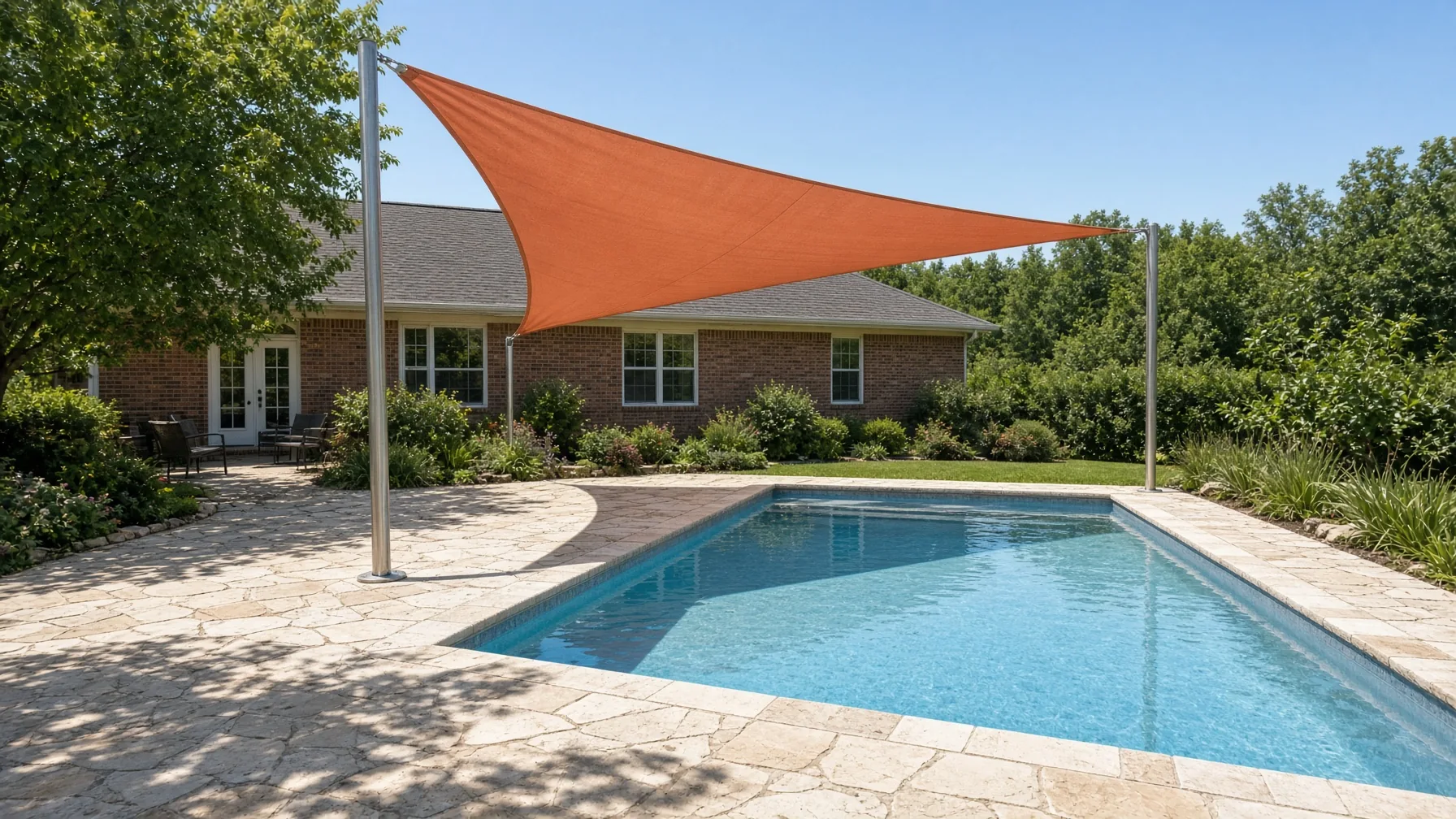
A triangle is the only shade shape that cannot rack. Three anchor points define a single plane, so the fabric tensions evenly and stays tight without the fluttering you get from a poorly set square. That is why most of the sails we install in Northwest Arkansas end up triangular, even when a homeowner started out asking for a rectangle.
Why three points beats four here
Northwest Arkansas gets straight-line wind events most springs. A four-point sail has to be tensioned in two directions at once, and if one corner relaxes the whole panel starts to move. A triangle has no such failure mode: pull all three corners and the fabric is done. Fewer posts also means fewer footings, which matters when you are working around a pool deck, a septic field, or tree roots you would rather not cut.
Overlapping triangles for bigger areas
The limit of a single triangle is span. Past roughly 20 feet on a leg the fabric needs more curve to stay tight, and the sail starts to look heavy. The fix is not a bigger sail, it is two or three smaller ones overlapped at different heights. Overlapping sails shed water better, throw a more interesting shadow through the day, and let you shade an irregular space without a giant rectangle sitting over it.
What holds it up
- Posts sized to span and sail angle, set in engineered concrete footings, not surface plates
- Turnbuckles at every corner so the sail can be re-tensioned seasonally by hand
- Fabric cut with a catenary curve on each edge, which is what keeps a sail flat instead of flapping
- Attachment to structure only where the framing can actually take the load, checked before we quote
Fabric and color
engineered shade fabric blocks the large majority of UV while staying breathable, so heat passes up through the weave instead of collecting underneath. Darker colors read as more shade underneath because they scatter less light into your eyes. Lighter colors stay cooler to the touch and reflect more heat off the top face. Both are correct answers depending on whether you are shading a pool deck or a dining table.
Where we install
We cover Rogers, Bentonville, Springdale, Fayetteville, Bella Vista, Cave Springs, Centerton, Lowell, Tontitown, Farmington, Prairie Grove and Siloam Springs, plus Southern Missouri and Eastern Oklahoma. Every job starts with a 3D design so you can see post placement and shadow before a footing goes in.
Compare hip canopies if you want a freestanding structure, or see what shade sails cost.