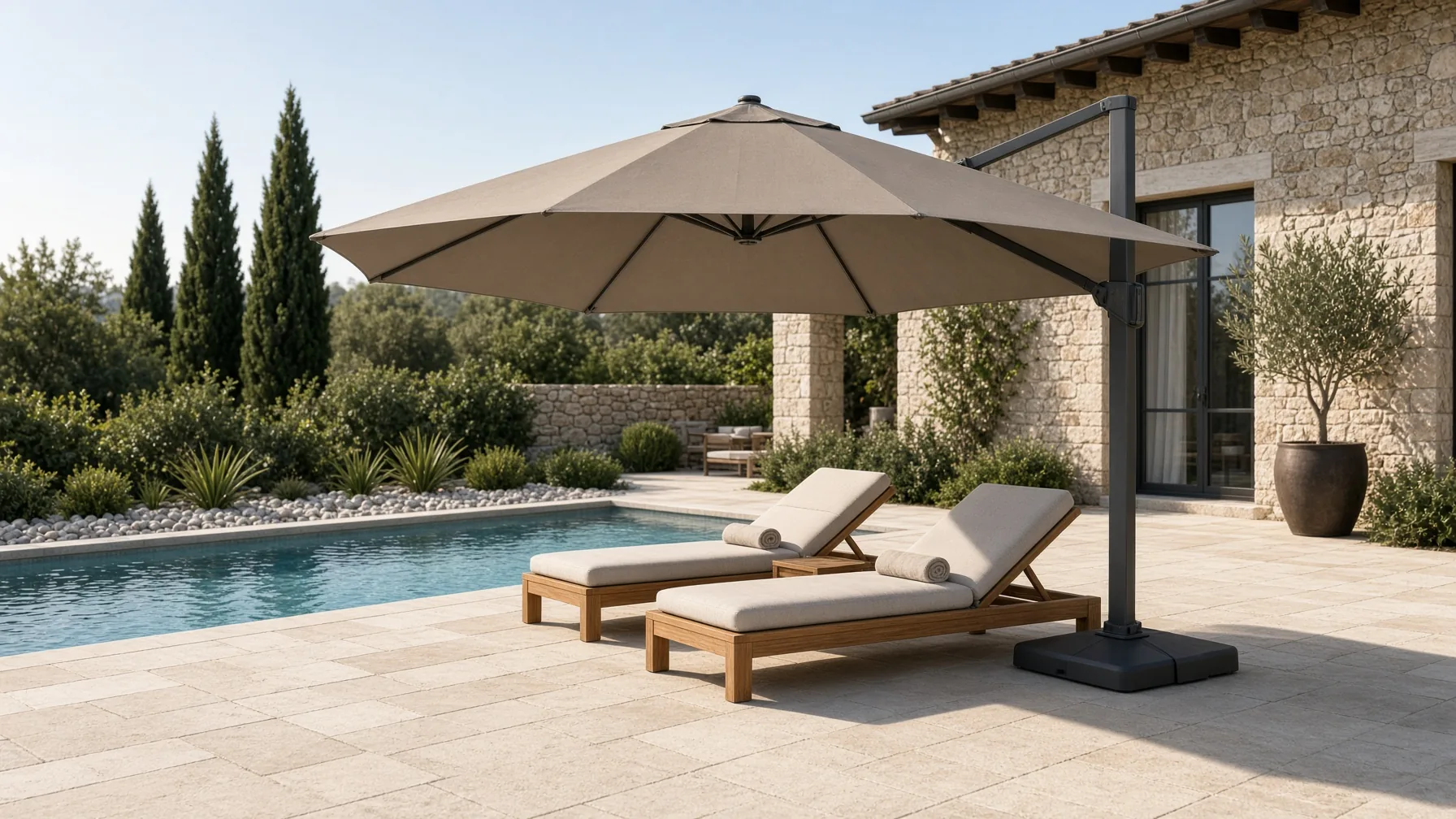
An umbrella is the least permanent shade there is, and sometimes that is exactly right. Rented property, a pool deck whose furniture layout keeps changing, a restaurant patio that needs to open up for events — those are all cases where pouring footings is the wrong answer.
Why the big-box umbrella fails
Almost every umbrella complaint traces to two things: the frame and the base. A thin aluminum rib set will fold in the first straight-line gust of the season, and a plastic base filled with water will not hold anything in real wind no matter what the box says. That is why people replace patio umbrellas every couple of years and conclude umbrellas are junk.
A commercial-grade umbrella is a different object. Heavier frame, marine-grade hardware, a base weighted or socketed for the actual span, and replaceable fabric rather than a throwaway canopy.
Cantilever versus center pole
- Center pole: cheaper, more stable in wind, but the pole sits in the middle of your space
- Cantilever: arm reaches over from the side, leaving the area completely clear, at higher cost and needing a much heavier base
- In-ground socket: the honest fix for a cantilever on a pool deck, a sleeve set into the concrete so the umbrella cannot walk
Where umbrellas beat a structure
Restaurant patios, because tables move and umbrellas can be closed for cleaning or events. Pool decks where a permanent structure would cast shade on the water when you want it warm. Rentals and any property where you may need to take the shade with you.
Where they do not
If you are shading the same area every day and never moving it, an umbrella is the most expensive way to do it over ten years. Fabric and frames are wear items. A hip canopy or a triangular sail costs more up front and less over time.
We would rather tell you that than sell you six umbrellas.